
Randolph County Criminal History Checks
Start with the kind of Randolph County record that can answer the question. A pending or closed charge belongs in North Carolina eCourts Portal and the Clerk of Superior Court files. Current confinement belongs in the sheriff's confined-inmate reports. A certified statewide court search comes from a Clerk of Superior Court, while a fingerprint-supported review of one's own North Carolina criminal history comes from the SBI. State prison, probation, parole, and post-release entries use the NCDAC locator instead.
Have the full name, spelling variants, and a case or incident number if known. Date of birth can help separate similar names, but protected identifiers should not be placed in a broad public-record request. The Randolph County suffix on newer Enterprise Justice case numbers is -750. That clue helps when a city such as High Point or Archdale crosses county lines.
- Choose the custodian based on whether the event is a police report, booking, court case, or state identification record.
- Search the public source with the strongest identifier, preferably the full case number or exact name.
- Confirm Randolph County, the filing court, and charge sequence before treating the result as a match.
- Compare the booking description with later court events and the final disposition.
- Ask the clerk or originating agency for an official copy when a public summary is not enough.
Portal and jail data can change at different times. A missing match may reflect timing, a changed charge, another county, or a restricted record. It is not proof that no event exists.
Four Randolph Criminal Record Custodians
A Randolph County criminal record is often a chain of distinct files. The arresting agency owns its incident or arrest report. The Detention Center owns booking and custody facts. The clerk controls the filed criminal case, hearings, disposition, and copies. The SBI organizes fingerprint-supported arrest and reported disposition cycles for a subject's state identification history. Each file has a different scope, and no one result replaces the other three. The official Randolph County Sheriff's Office profile shows the headquarters that anchors county law-enforcement records.
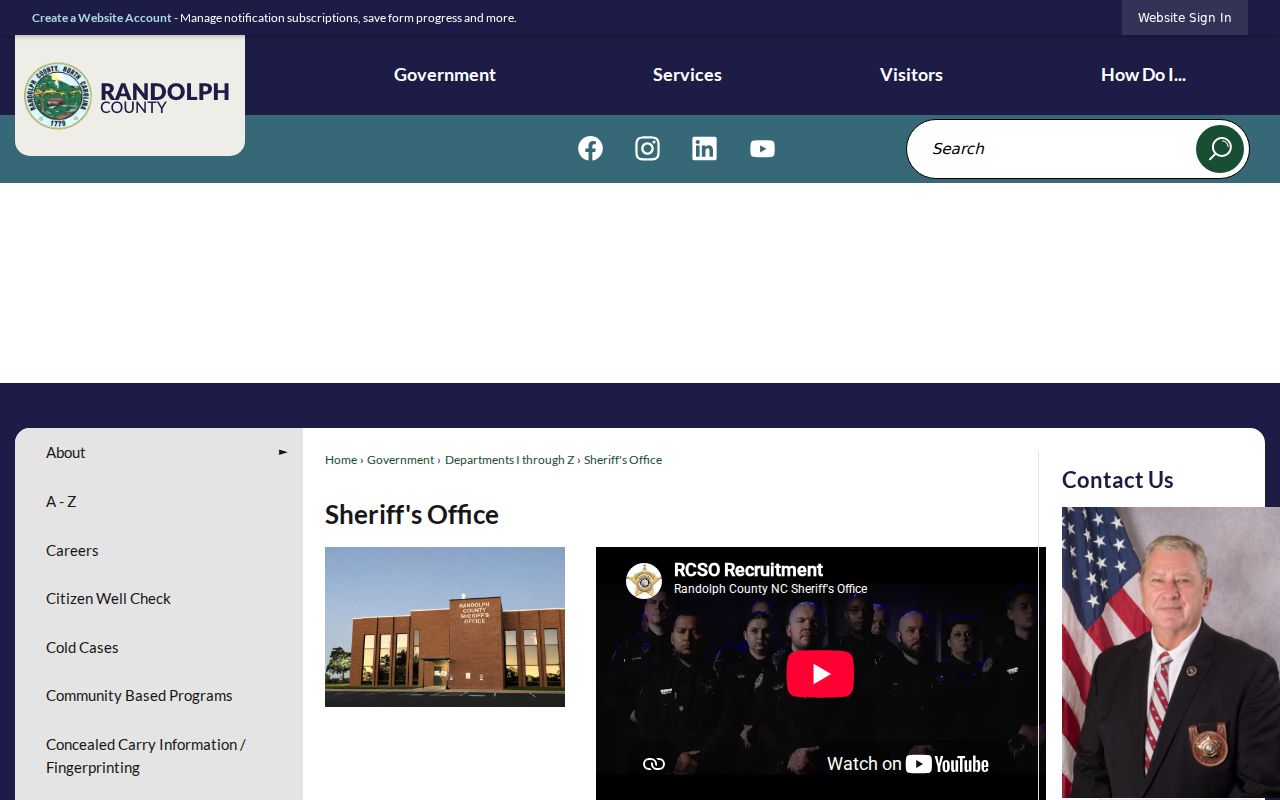
The headquarters record channel matters most for sheriff-created reports, warrant questions, and requests for older booking facts. Its records staff may route a city-police incident back to the city that created it. The county's Sheriff Administration description also identifies clerical records work and fingerprint functions.
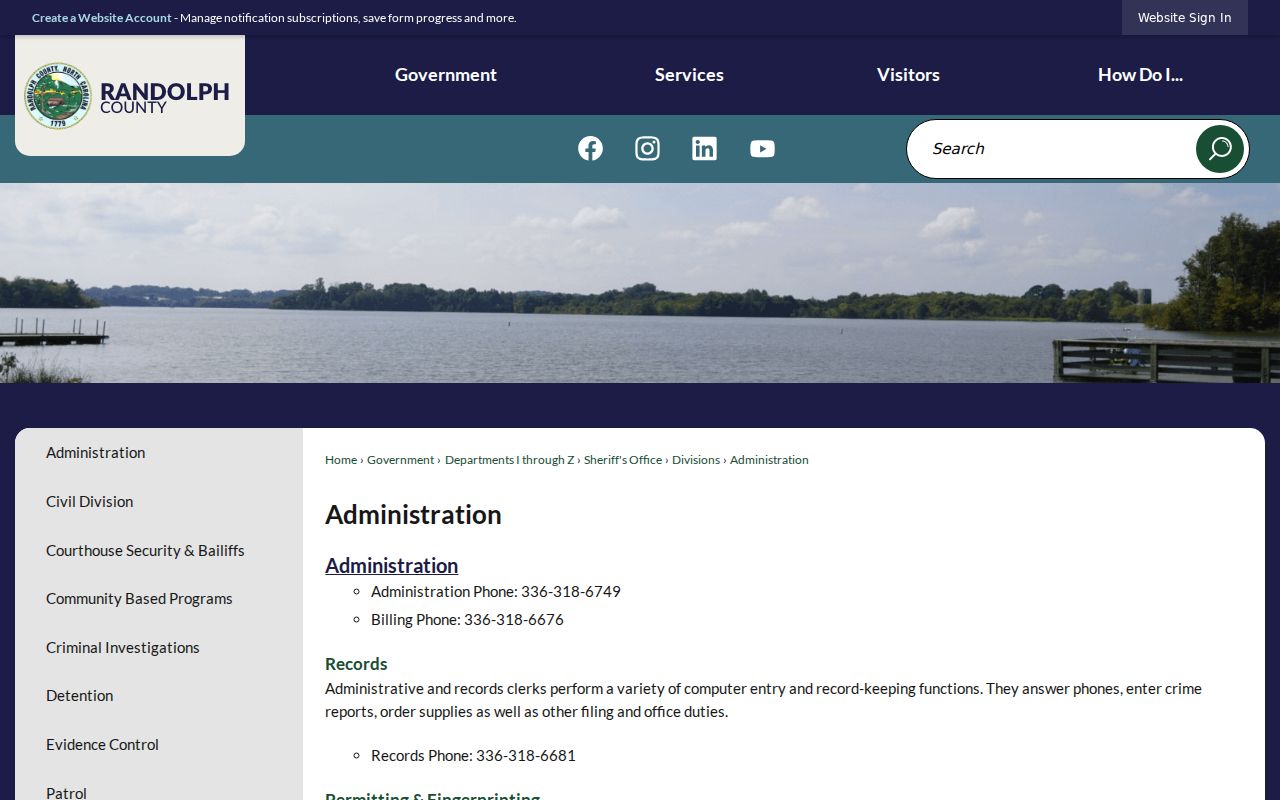
That division is the practical starting point for scope and availability questions, but filed court documents still belong to the Randolph County clerk.
Sheriff Records
727 McDowell Road
Asheboro, NC 27205
336-318-6698
Weekdays, 8 a.m.-5 p.m.
Clerk of Superior Court
176 East Salisbury Street, Suite 201
Asheboro, NC 27203
336-328-3100
Counter listed 8:30 a.m.-5 p.m.
Detention Center
811 New Century Drive
Asheboro, NC 27205
336-318-6625
Current custody and booking information
Official Background Checks in North Carolina
North Carolina offers several official products, each built for a separate task. A clerk can run a certified statewide search of filed North Carolina court records for $25. The free Portal gives public case information, but the Judicial Branch does not describe it as the official criminal-background-check product. For personal review, the SBI accepts an original FD-258 fingerprint card, its form, and a $14 certified check or money order. The result is mailed only to the subject. The Judicial Branch certified record-check instructions distinguish the clerk product from a casual Portal search.
For a Randolph County request, AOC-CR-314 records the requester, subject identifiers, search scope, and certification choice. Payment and identification methods should be confirmed with the clerk before filing. The SBI background-check hub explains the fingerprint-supported state repository route.
An SBI Right to Review is tied to fingerprints and is meant for review of one's own record. It is not the same as a sheriff report, a jail row, or a clerk's case summary.
| Official channel | What it returns | Published cost |
|---|---|---|
| Clerk certified search | Statewide North Carolina court-record search | $25 |
| SBI Right to Review | Subject's fingerprint-supported North Carolina history | $14 |
| eCourts Portal | Informational public case summaries | Free public access |
Randolph County Fingerprint Record Appointments
Randolph County Sheriff fingerprint service is by appointment. The local capture step takes place at 727 McDowell Road, but the agency that requested the fingerprints controls the required card, purpose, and submission path. For SBI personal review, the applicant sends the original fingerprint card and request material to the SBI in Raleigh. If the online schedule does not work, Sheriff Records can address appointment access at 336-318-6698. The county's local fingerprint instructions state the appointment requirement.
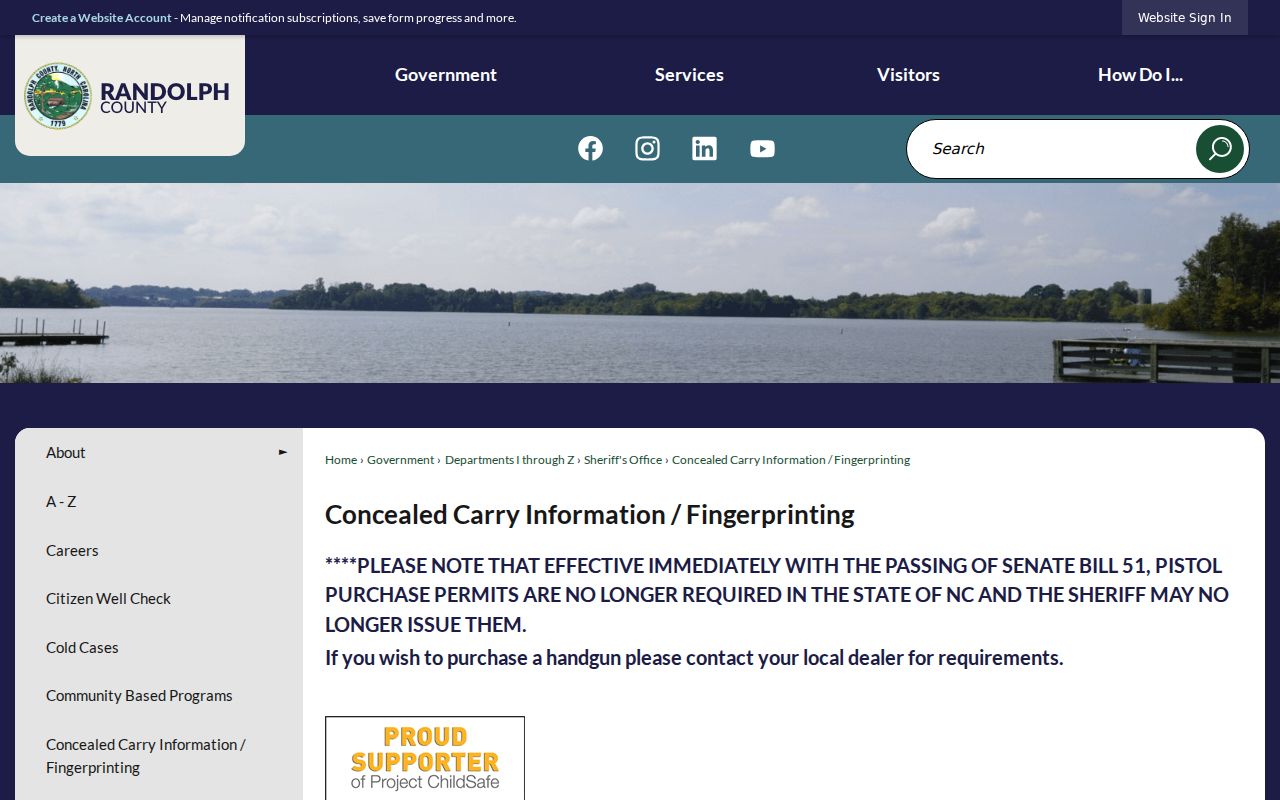
Those instructions connect the physical sheriff service point to the booking workflow used for available appointments. The official Randolph Sheriff Permitium appointment workflow collects the service type, applicant contact details, appointment slot, and payment fields.
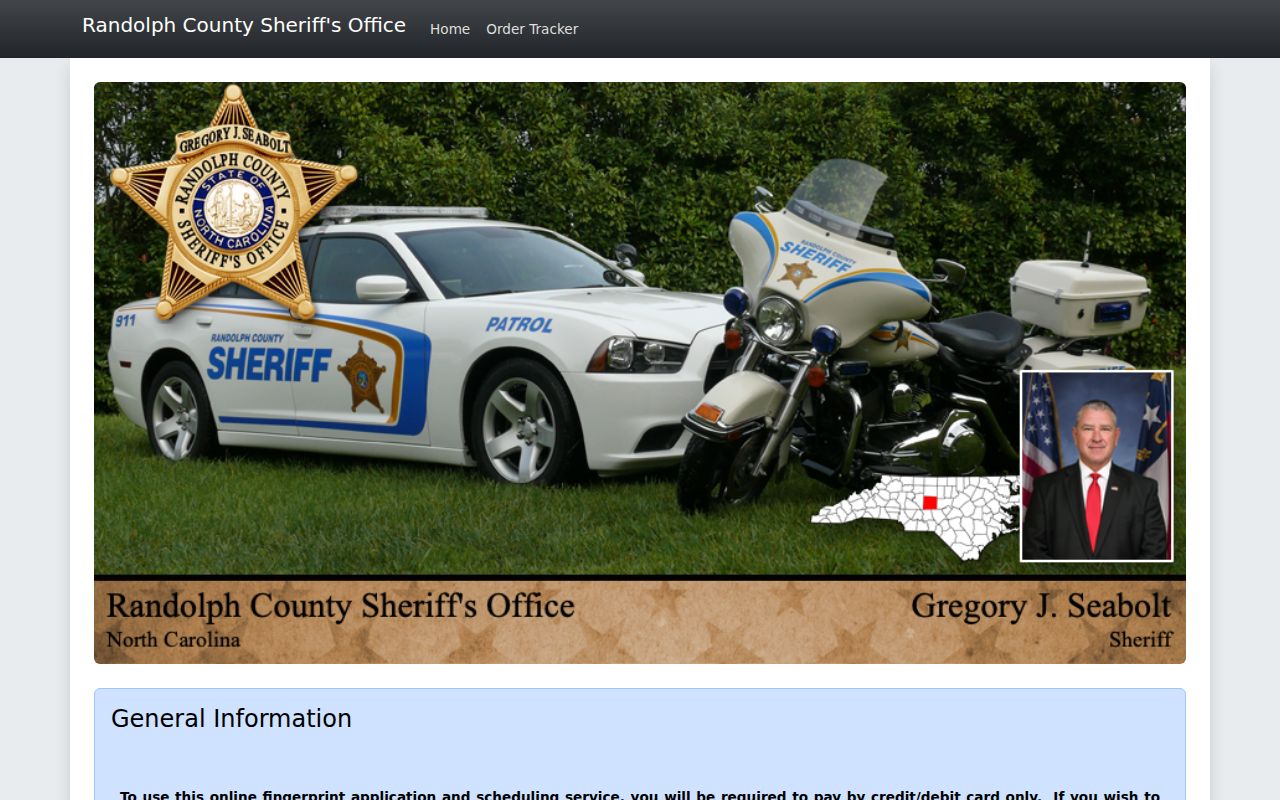
The exact local fee depends on the service shown in that live workflow. It should be checked there rather than assumed from the separate SBI mailing fee.
Kinds of Criminal Records
Randolph County criminal records describe different stages of one event. A police report can document allegations and basic incident facts. Booking records show intake and release conditions. Court files show charges as filed, hearings, and outcomes. Repository records connect reported cycles to fingerprints. NCDAC records concern state custody or supervision, while the North Carolina Sex Offender Registry is limited to persons who have a present duty to register.
- Incident or arrest report: held by the sheriff or municipal police department that created it.
- Booking record: held by the Randolph County Detention Center for current or past local custody.
- Court case: held by the Clerk of Superior Court with charge events, hearings, judgment, and sentence.
- Warrant: issued by a judicial official, with access affected by service status, sealing, and juvenile rules.
- State record: held by SBI or NCDAC for fingerprint identification, prison, or community supervision data.
North Carolina classes felonies from A through I and misdemeanors as A1, 1, 2, and 3. Superior Court tries felonies. District Court handles misdemeanors, infractions, and preliminary felony steps. The charge class and prior-record level work together under structured sentencing, so a label alone does not state the sentence.
Randolph County Jail Records Show Custody
The Randolph County confined-inmate gateway offers two generated reports: one sorted by date confined and one by last name. It is not a conventional search form. A reader chooses a report, browses the table, and expands a row. Browser find can help locate a name. The reports refresh four times each day, so a bond or release may not appear at once.
The official confined-inmate list by name displays the expandable Randolph County roster format.
The roster can show intake time, arrest agency, arrest location, charge text, incident and court references, bail, facility, pod, and security classification. The sheriff warns that it reflects a booking event, not criminal history, a conviction, or the final outcome. Older information should be requested from Sheriff Records, while a filed result can be followed in the Randolph County arrest search.
When no public warrant search appears on the sheriff's website, do not treat the custody list as a substitute. Call Sheriff Records or the relevant city police agency, check eCourts for the underlying case, and ask the Randolph County clerk about court-issued process.
Randolph County Criminal Records: What They Contain
The field set depends on the custodian. A repository record begins with identity and fingerprint transaction data, then groups arrests and reported outcomes. A court case centers on its case number, charges, register of actions, hearings, disposition, sentence, and money due. A booking row focuses on present confinement. Public copies omit or redact protected identifiers, victim information, juvenile material, and data covered by an expunction or sealing rule.
| Name and identifiers | Legal name, aliases, date of birth where public, and agency or court numbers used to distinguish records. |
|---|---|
| Arrest and booking data | Arrest time, agency, location, intake, facility, charge text, incident reference, and release conditions where shown. |
| Charges and statutes | Each count, offense description, cited law, alleged date, and felony or misdemeanor class. |
| Disposition | The outcome of each charge, which may be a conviction, acquittal, dismissal, or another recorded result. |
| Sentence | Custody, probation, restitution, costs, and other judgment terms that the public case displays. |
| Custody or supervision | County confinement belongs to the jail; state prison and community supervision belong to NCDAC. |
A single case can hold mixed outcomes. Read each charge line, not just the case status. The original arrest wording may remain in a booking file even after a prosecutor amends or dismisses a court charge.
- Disposition
- The recorded outcome for a charge or case.
- Register of Actions
- The dated sequence of filings, settings, rulings, and other case events.
- Bond
- Security or conditions used to support release and return to court.
- Expunction
- A North Carolina statutory process that removes qualifying records from routine public access.
Search Randolph Court Records With -750
Randolph County joined Enterprise Justice in October 2024. In Smart Search, a full case number is the cleanest key. The newer pattern contains a two-digit year, case-type letters, a six-digit sequence, and a three-digit county identifier. Randolph references commonly end in -750. A name search permits documented wildcards: at least three last-name letters plus an asterisk and one first-name letter plus an asterisk.
Use the North Carolina eCourts Portal to open the case summary and Register of Actions. Confirm the location, parties, and charge sequence, then inspect events, hearings, and disposition. The Randolph County clerk remains the source for official copies. The broader Randolph County court case lookup explains how charges move from filing through judgment.
| Portal control | Use | Randolph record tip |
|---|---|---|
| Smart Search | Party or case-number search | Use the full number ending in -750 when known |
| Advanced filters | Location, case type, and status | Confirm Randolph County before opening a result |
| Search Hearings | Hearing date, time, and place | Check local schedules against the case event |
| NC Judgment Search | Judgment filters | Return to Smart Search for the full summary |
| Make Payments | Some court costs and fees | Cash bonds and bond forfeitures are excluded |
At the courthouse, public terminals can search a defendant name, case number, or victim or witness name. Phones, computers, cameras, and other multimedia devices are barred from entry, so bring the case details on paper.
North Carolina Public Access Laws
Public access depends on both the record type and the law that governs its custodian. Chapter 132 supports reasonable inspection and copies of public records, but criminal investigative and intelligence files have distinct limits. Court indexes and records are generally open unless a statute or court order restricts them. Expunged material, juvenile files, protected victim facts, and sensitive identifiers do not become public merely because a request is broad.
Key North Carolina laws:
G.S. 132-1 and 132-6 define public records and the general right to inspect or obtain copies.
G.S. 132-1.4 protects investigation and intelligence files while requiring release of listed basic incident and arrest facts.
G.S. 7A-109 opens court records and indexes unless another law or order limits access.
G.S. 15A-151 controls disclosure and limited authorized access after expunction.
Ask for the segregable public fields when an agency withholds an investigative narrative. That narrower request can obtain the basic date, time, location, charge, and arrest facts that the statute lists without demanding a protected working file.
Route Randolph County Record Requests
There is no countywide pool for all police reports. Request a report from the agency whose officer investigated. For sheriff material, identify the incident number if known, the date or date range, place, involved agency, and exact document sought. Call Records at 336-318-6698 to check scope, use the headquarters counter during posted weekday hours, or mail a focused Chapter 132 request to 727 McDowell Road, Asheboro, NC 27205.
| Channel | Best use | Randolph County detail |
|---|---|---|
| Online | Current custody and filed case summaries | Sheriff roster and eCourts Portal |
| Phone | Scope, availability, and warrant routing | Records 336-318-6698; main 336-318-6699 |
| In person | Agency inspection, clerk terminal, or copies | McDowell Road for sheriff records; Salisbury Street for court files |
| Focused public-record request | Send sheriff requests to headquarters with event details | |
| App | Mobile current-inmate access and agency alerts | Free RCSO app for Apple and Google platforms |
| Other custodian | City incident or state record | City police, clerk, SBI, or NCDAC based on record type |
No fixed sheriff criminal-report fee schedule, email request address, or promised turnaround was found in the official county sources. Ask whether inspection is available and request a cost estimate before authorizing a special service.
Restricted, Sealed & Expunged Records
North Carolina uses several expunction statutes, not one general request to seal every record. The correct route depends on the outcome, age at the event, offense, prior history, and waiting period. Dismissals and acquittals, identity-theft matters, juvenile events, and qualifying convictions can follow different forms. Some offenses and facts are excluded.
The Judicial Branch's North Carolina expunction resource organizes the governing forms and filing paths.
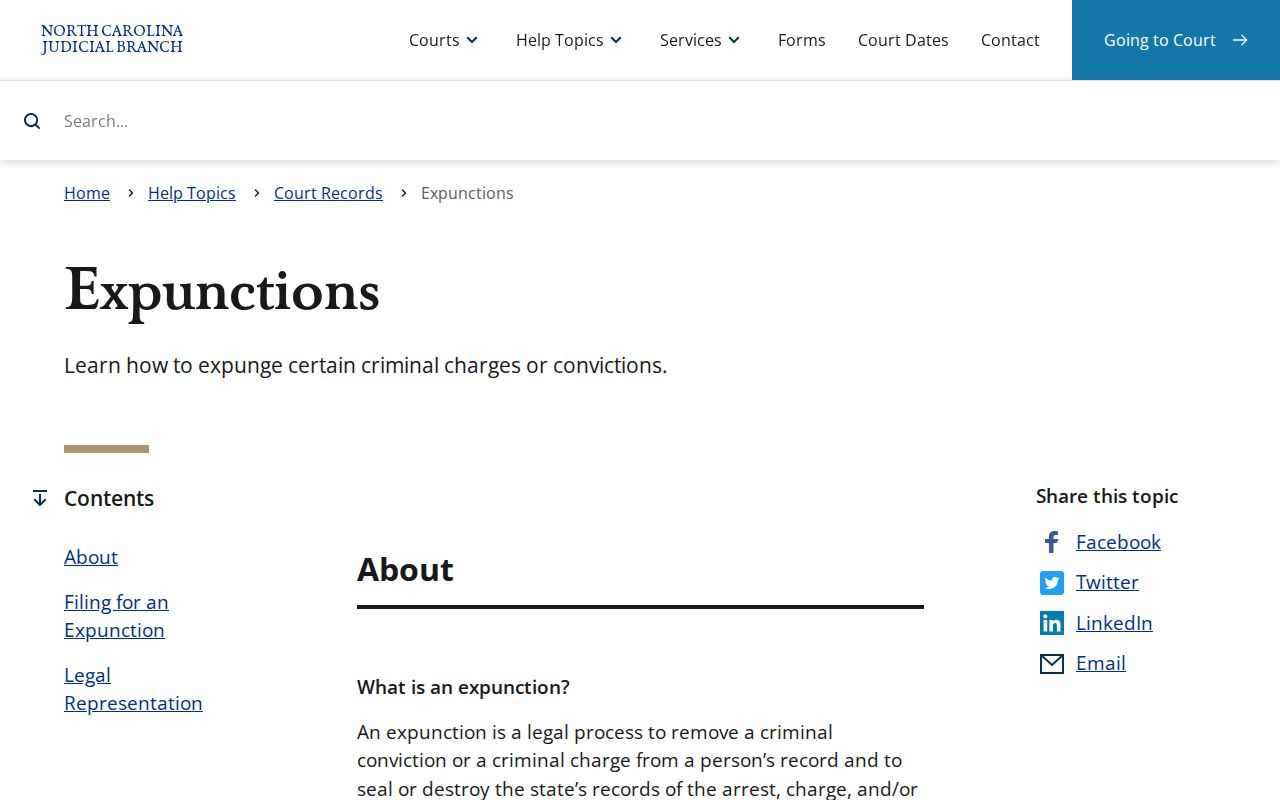
A Randolph County filer should first obtain the complete case number and disposition from Portal or the clerk. Next, match the facts to the statute and current AOC form, list all companion cases and charges, file with the Randolph clerk, follow notice and review steps, and verify that public court and repository products reflect any order.
Some dismissal or acquittal routes have no filing fee, while other petitions carry a statutory fee. The live form and clerk should confirm the amount. An expunction limits routine public access under its law, but it does not erase private news archives, and limited government access can remain under G.S. 15A-151.
Randolph County Custody Records Split
County jail and state correction records answer different questions. The Randolph County roster covers people currently confined at the local Detention Center and refreshes four times daily. Once a person enters state prison or state-run community supervision, NCDAC's Offender Public Information Search is the correct public locator. A person can also appear in eCourts for the judgment while no longer appearing on the jail list. The official NCDAC Offender Public Information Search provides name, offender-number, demographic, and status filters.
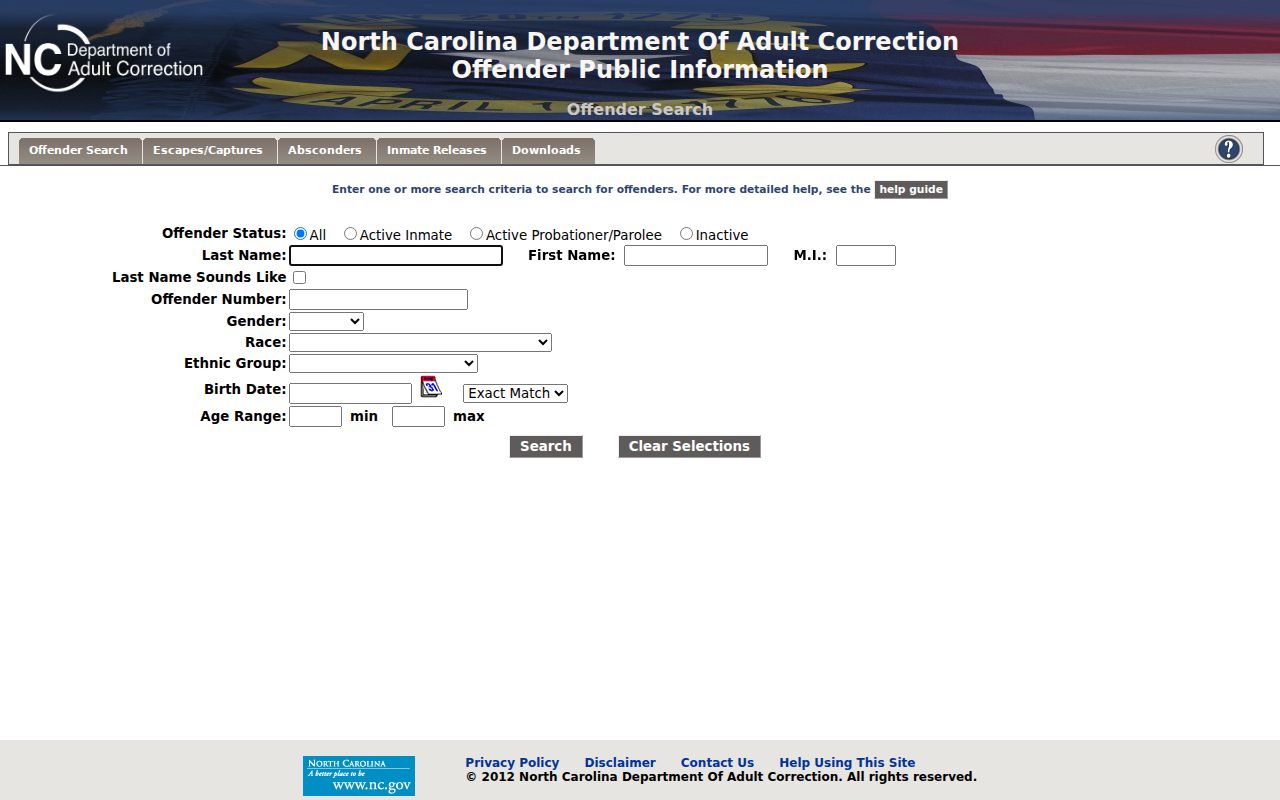
Use non-sensitive identifiers to confirm a result, then compare the sentence and violation events with the Randolph County court file. The locator may show prison, probation, parole, or post-release data designated public. The NCDAC Community Supervision overview confirms that probation and post-release work are state-run rather than a Randolph County department.
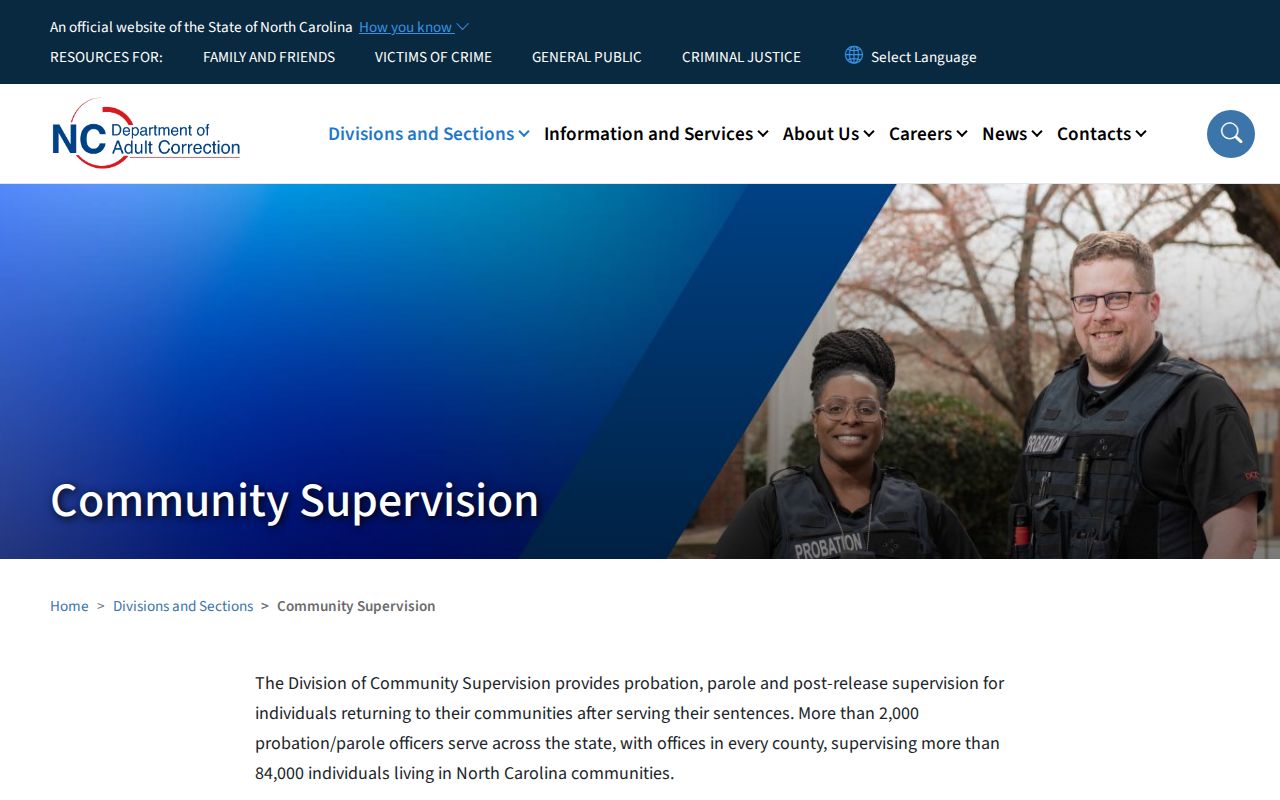
Probation officer notes and sensitive plans are not automatically public. The public chain is the NCDAC status, the Randolph County judgment, and any later violation hearing or order recorded in eCourts.
Randolph County Criminal Access Changed
October 2024 marks a clear break in Randolph County court-record practice. The county went live on Enterprise Justice with ten other counties, moving public searches toward eCourts Portal and current courthouse terminals. Newer criminal case references use the Enterprise Justice format, and older instructions may describe systems or forms that no longer match the live workflow.
Statewide completion followed in October 2025. Portal now reaches all 100 North Carolina counties, which helps with cross-county names and cities. It does not erase the need to confirm the filing location. High Point spans four counties, and Archdale spans Randolph and Guilford. A city name or police agency alone does not prove that the case, jail, or clerk belongs in Randolph County.
The same divide explains why a police incident number, booking court reference, and -750 case number should not be read as interchangeable. They link stages of the same event, but each is issued by a different record system.
City-by-City Criminal Records in Randolph County
Municipal police departments create their own incident and arrest reports, but North Carolina has no municipal criminal courts. A city charge moves into District or Superior Court in the county where the matter was filed. The three largest incorporated cities lying wholly or partly in Randolph County are High Point, Asheboro, and Archdale. County lines are especially important for High Point and Archdale, while Asheboro is the county seat and the main Randolph County records hub.
High Point Record Check
117,674 total municipal population. Confirm the incident county before choosing a jail or court.
Asheboro Record Check
28,051 residents. Police, courthouse, and jail records sit at three different Asheboro addresses.
Archdale Record Check
12,169 residents. Determine whether an event falls on the Randolph or Guilford side.
Each city record check follows its police channel first, then routes a filed Randolph County case to eCourts and the clerk. A recent confinement goes to the county roster that serves the event location, not simply the city named in the report.